

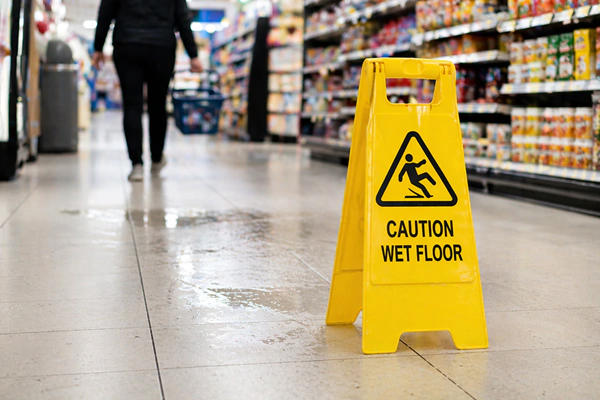
Huyton has a mix of large supermarkets, retail parks, and local high street shops, all of which see consistent daily footfall. These environments are designed for convenience, but when safety standards slip, they can quickly become hazardous, leading to potential accidents that may result in injuries for customers.
If you’ve had an accident in a supermarket or shop in Huyton, the key question is whether it could have been prevented. Retailers have a duty to keep their premises safe for customers. When that duty is not met, and an injury occurs as a result, a compensation claim may be possible.
Understanding where accidents happen and how responsibility is assessed helps clarify whether your situation meets that threshold.
Where accidents happen in Huyton retail settings
Accidents in retail environments tend to occur in predictable areas where hazards are more likely to develop:
- Supermarket aisles where spillages or dropped items are not cleared promptly
- Store entrances where wet floors from rain or foot traffic create slipping risks
- Checkout areas where clutter, bags, or poorly placed items obstruct walkways
- Stock areas or shelving zones where items may be unstable or poorly stacked
While these conditions are not unusual, improper management can turn them into a problem.
In many cases, the issue is not the presence of risk but the failure to monitor and deal with it in a reasonable timeframe.
Speaking to Marley Solicitors at an early stage can help determine whether the conditions you encountered should have been addressed before the accident occurred.
Common types of supermarket and shop accidents
Retail accidents often fall into clear categories, each linked to how the environment is managed.
- Spillages left unattended on the floor, particularly in supermarkets where liquids or food items are dropped
- Wet floors without visible warning signs, especially near entrances during poor weather
- Items falling from shelves due to poor stacking or lack of staff supervision
- Trip hazards caused by loose flooring, damaged tiles, or poorly positioned stock
- Narrow or obstructed aisles where customers are forced to navigate around hazards
- Overcrowded shop layouts where movement becomes restricted and unsafe
- Faulty doors, fridges, or fixtures that create unexpected risks
- Poor lighting in certain areas, making hazards difficult to see
- Cleaning processes that create hazards without proper warning or control
Each of these situations comes down to one key issue: whether the shop or supermarket took reasonable steps to prevent harm.
A hazard does not need to be permanent to be actionable. Even temporary conditions can form the basis of a claim if they were not managed properly, such as spills on the floor or poorly placed merchandise that could lead to customer injuries.
Who is responsible for a shop or supermarket accident?
Responsibility in retail environments usually sits with the business operating the premises. Shops and supermarkets are expected to carry out regular checks, maintain safe layouts, and respond quickly to hazards.
This includes:
- Monitoring floors for spillages or debris
- Ensuring shelving is stable and safely stocked
- Keeping walkways clear and accessible
- Using warning signs where temporary risks cannot be immediately removed
If the business fails to follow these processes, it could potentially bear responsibility for any resulting injuries.
In some situations, responsibility may extend beyond the store itself. For example, if a third-party contractor is responsible for cleaning or maintenance, their actions may also be relevant.
The key point is that responsibility is based on whether reasonable safety measures were in place and actively followed.
A comparative example
Looking at two similar situations helps illustrate how liability is assessed:
Scenario A: A liquid spillage is left on a supermarket floor for an extended period without any warning signs. A customer slips and is injured. In this case, the hazard was present and not addressed, making a claim more likely to succeed.
Scenario B: A spillage occurs but is quickly identified, cleaned, and marked with clear warning signage. A customer still slips shortly after. In this case, the shop may be able to show that reasonable steps were taken, making a claim less likely to succeed.
The difference is not the fall itself, but how the risk was handled.
When you can and cannot claim
Understanding the distinction between valid and non-valid claims is important.
You may be able to claim if:
- There was a clear hazard that created an unnecessary risk
- The business failed to act within a reasonable timeframe
- The injury can be directly linked to the unsafe condition
- There is evidence showing how the accident occurred
A claim may not succeed if:
- The hazard was dealt with promptly and appropriately
- Clear warning signs were in place
- The accident occurred in a way that could not reasonably have been prevented
This balance is important. It ensures that claims are based on genuine failures in safety rather than the fact that an accident happened.
What compensation can include
Compensation is designed to reflect the impact the accident has had, not just the event itself.
This may include:
- Loss of earnings if you are unable to work
- On-going financial impact if your ability to work is reduced
- Medical treatment or rehabilitation costs
- Travel expenses related to appointments
- The physical discomfort caused by the injury
- The disruption to your daily routine and independence
Even a relatively minor accident in a shop can have wider effects, particularly if it limits mobility or affects your ability to carry out normal activities.
Moving forward after a retail accident in Huyton
Accidents in supermarkets and shops are often preventable. When they occur, the focus should be on whether the environment was managed properly and whether reasonable steps were taken to protect customers.
If you didn’t meet those standards, it could be beneficial to further investigate your position. Taking action early helps ensure that evidence is available and that your situation can be assessed clearly based on what actually happened.